
Share Ernest L. Stevens Sr.'s obituary with others.
Invite friends and family to read the obituary and add memories.
Stay updated
We'll notify you when service details or new memories are added.
You're now following this obituary
We'll email you when there are updates.
Select your format and elements to print

IN LOVING MEMORY OF Ernest L. Stevens Sr.
Ernest L.
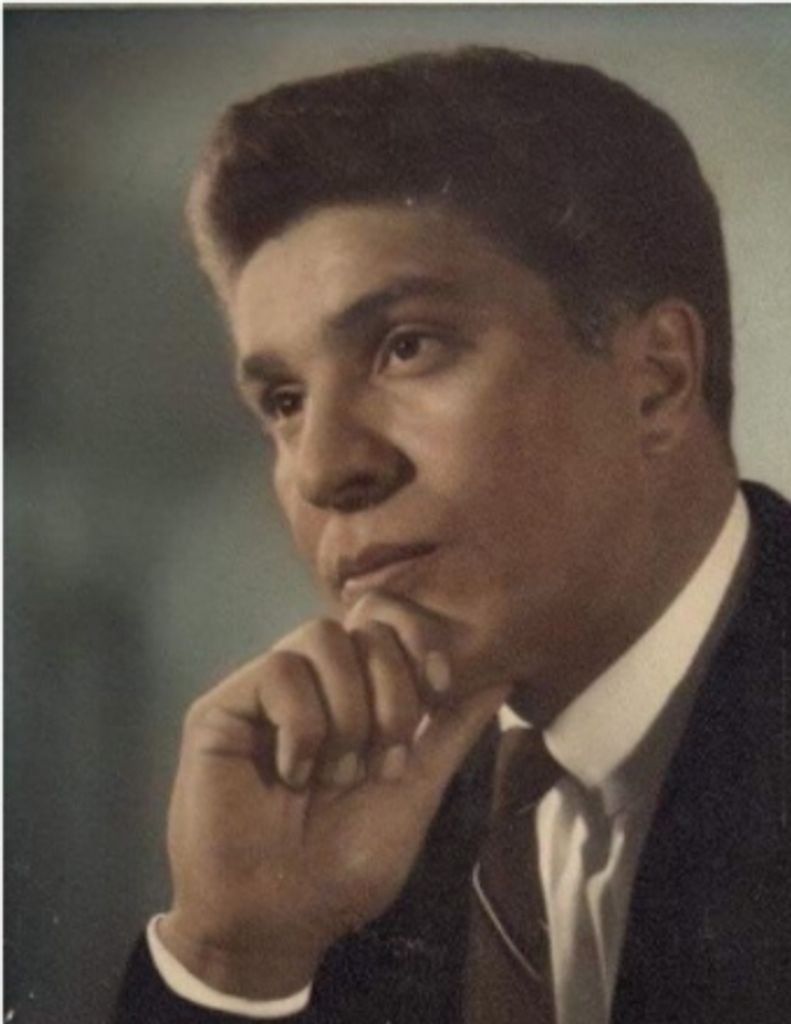
Stevens Sr.
February 17, 1932 — June 1, 2024
Ernest L. Stevens Sr.'s Obituary
Ernest Stevens, Sr., AtɅ́‧nis, a dedicated advocate for sovereignty, self-determination, self-governance, and Native rights, passed away on Saturday, June 1st, at the Anna John Resident Centered Care Community facility in Oneida, Wisconsin. Born in 1932, Ernie Stevens, Sr. was a prominent figure in the Indian political activism during the 1960s and 1970s.
A U.S. Marine Corps combat veteran of the Korean War, serving 4 years and earned the rank of Staff Sergeant at 19 years of age. Stevens was recognized for his service and dedication, receiving accolades such as the Korean Unit citation and the Korean Service medal with three battle stars. During his time in Korea, he was part of the well-known conflict, the Frozen Chosen. The Marines who fought there are known as "the chosen few" where nearly 2,500 of the US forces died, some froze to death. The wounded totaled 5,000 and 8,000 suffered frostbite.
Stevens illustrious and impactful career includes serving in numerous leadership positions, including as executive director of the Los Angeles Indian Center, the Institute for Community Anti-Poverty Corporation, the Inter-Tribal Council of California, the Indian Action Project in Arizona, and the LA Human Rights Commission.
Coming from humble beginnings, Stevens, Sr. began a profound rise to national recognition at a time of great change in Indian Country. He remained a charismatic figure to many tribes, Indian leaders, and Indian people, particularly in Arizona, where his early professional years left a significant imprint. He held a bachelor's degree in Business Economics and a Community Fellows Program certification from the Massachusetts Institute of Technology (MIT).
In the mid-1950s, Ernie moved to Los Angeles, where he found great struggles and challenges as a young man fresh out of military service in his country. He would meet Joe Vasquez, a man who would become one of his closest friends in life in the professional and political world. Joe picked up Ernie and got him back on his feet. Together, they would work throughout Los Angeles and Indian Country, helping people, promoting Indian business, and moving Indian Country forward.
In the mid-1960, Ernie Stevens Sr. moved to Tempe, Arizona, and work as the Executive Director for the Indian Action Project and with Tribes in the economic and community development arena. While in Arizona, he was invited by the Ford Foundation to participate in an exchange program that sent him to New Zealand, along with nine other Indian men, to tour Maori native communities and exchange ideas and develop recommendations concerning health, education, housing, socio-economic; economic development; and governance and language issues. This exchange program brought ten Maori men to Indian Country, and upon completion of their assignment, they all met in New Zealand to debrief and deliver their joint report. Their work would be considered a model and standard for Indian Country and the Indigenous People of New Zealand. His accomplishments and unwavering commitment to Indian Country did not go unnoticed, as evidenced by the Leon Grant Spirit of the Community Award bestowed upon him by the Phoenix Indian Center in 2017.
In 1969, Ernie Stevens Sr. accepted the position of Executive Director for the Inter-Tribal Council of California, where he is still well-known and revered among California elders for his work. Here, he was recruited by the late Louis Bruce, former Commissioner of the Bureau of Indian Affairs, and he became an integral part of a team of eleven Indian men who would change the course of policy. While at the Bureau, Ernie Stevens Sr. would serve as Development Director, Community Development Director, and Acting Commissioner. Several key issues initiated and implemented at that time were the concepts of contracting and Indian Preference. He played a pivotal role in shaping Indian policy, advocating for tribal self-determination, and significantly contributing to the advancement of Indian Country.
During his tenure at the Bureau of Indian Affairs, Ernie Stevens Sr. would be elected First Vice-President to the National Congress of American Indians and served as the Executive Director of the American Indian Policy Review Commission, which led to him being confirmed to serve as the first Staff Director to the Senate Select Committee on Indian Affairs. While serving as Staff Director for the American Indian Policy Review Commission, Ernie Stevens Sr. would lead a staff of over 200, primarily young and educated Indians, to research, compile, and deliver the most comprehensive study regarding Indian Country since the Meriam Report in 1928.
Ernie Stevens Sr. would later work as the economic development director for the Navajo Nation. Upon returning home to Oneida, he would fulfill his duties as an elected Councilman on the Oneida Business Committee and later as the Senior Manager of the Development Division for the Oneida Nation. Ernie was then recruited to participate in a 1-year Community Fellows program in Boston at MIT. Upon his return and while serving as a consultant for Oneida, Ernie suffered a debilitating aneurysm that left him unable to continue his work.
He left a lasting imprint on those he encountered. Whether through his leadership roles in various organizations or his involvement in policymaking at the national level, Ernie Stevens, Sr., was a driving force for change and progress in Indian Country.
He was a visionary leader, a devoted advocate, and a beloved community member. Ernie Stevens, Sr.'s indelible mark on Indian Country, will forever be remembered and cherished by all whose lives he touched.
Ernie is survived by his children, Kelly (Shelly) Stevens of Oneida; Ernie (Cheryl) Stevens, Jr. of Oneida; Mike (Tommi) Stevens of New Town, ND; Toni (Doug) House of Oneida; David Stevens of Appleton; Pamela Stevens of Milwaukee; Jennifer Stevens of Milwaukee. He is also survived by 24 grandchildren and 36 great grandchildren. He is preceded in death by the love of his life, his wife Patricia, his mother Maria Hinton a community icon, and son Coleman.
His 24 Grandchildren include: Paul, Shakira, Anastasia, Natasha, Kelly Jr., Coleman, Vernon, Brandon, Ernest III, Margaret, Maria, Lois, Michael Paul, Thomas, William, Bernadine, Victor, Cole, Jasmine, Jessica, Conrad Jr., Justin, Alayna, and David.
Friends may call at Ryan Funeral Home 305 N. Tenth Street, De Pere from 4:00PM – 7:00PM on Tuesday, June 4, 2024. Oneida Hymn Singers will sing at 6:30PM. Visitation will continue at 8:00PM at the Oneida Longhouse, until the time of service at 10:00AM Wednesday morning, June 5th. Burial to follow at Holy Apostles Cemetery.
A big thank you to the Anna John Resident Centered Care Community facility staff for taking so good care of Ernie during his time there. They have become an extension of Ernie's giant family. We thank them from the bottom of our hearts for their kind, caring love for Ernie. Thank you to the Oneida community for your support and love for Ernie Stevens, Sr. The family could not do this without you. His dream for the Oneida Community was always one of economic diversity, tribal tradition, a strong landbase, and education for all. We are living his dream and it is up to each of us to carry on his dream.
Funeral Services for Ernest L. Stevens Sr.
Visitation

Tuesday
Ryan Funeral Home & Crematory
4:00 - 7:00 pm
Hymn Singers 6:30PM
Visitation
Tuesday
Oneida Nation Longhouse
8:00 - 11:59 pm
Visitation
Wednesday
Oneida Nation Longhouse
1:00 - 10:00 am
Service
Wednesday
Oneida Nation Longhouse
Starts at 10:00 am
Graveside
Wednesday
Holy Apostle Cemetery
Starts at 11:45 am
Ernest L. Stevens Sr.'s Guestbook
Visits: 69
This site is protected by reCAPTCHA and the
Google Privacy Policy and Terms of Service apply.
Service map data © OpenStreetMap contributors